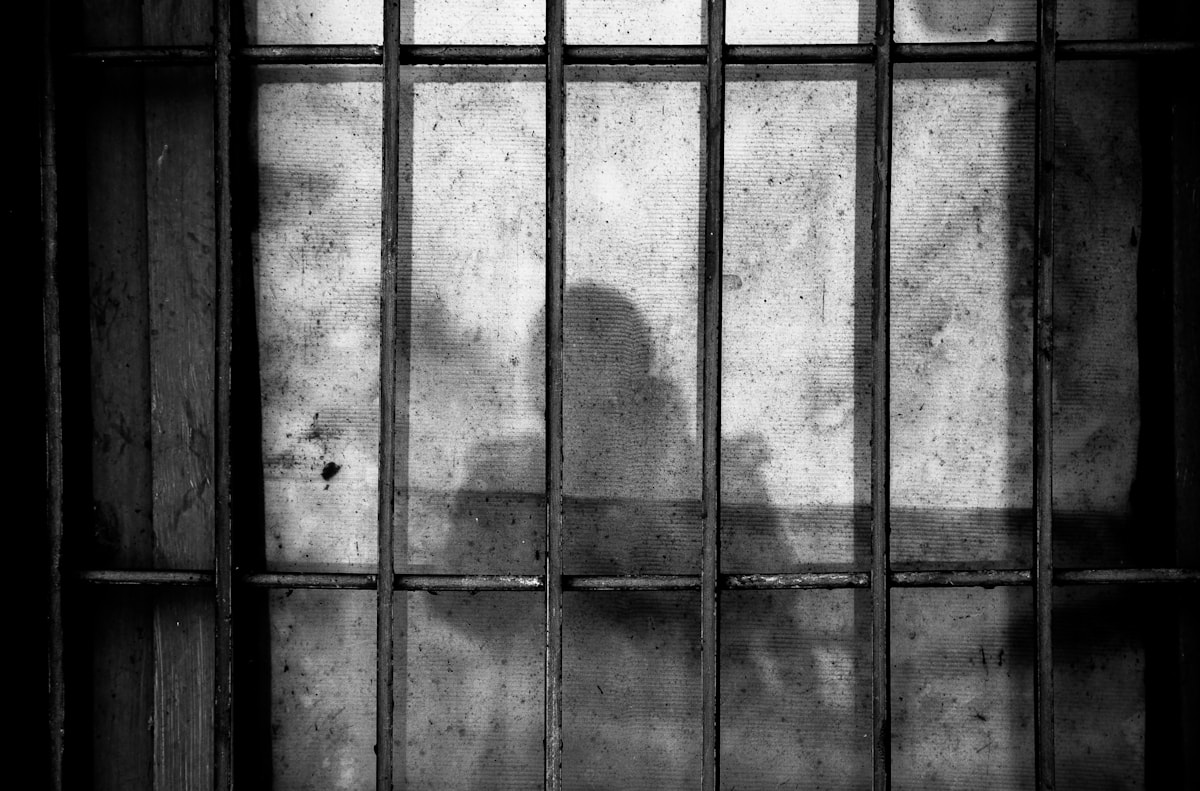
Martha Wright-Reed was 75 years old when she filed a complaint with the Federal Communications Commission. Her grandson was incarcerated in a Washington, D.C. correctional facility. A fifteen-minute phone call cost her $17. She was on a fixed income. She called anyway, because he was her grandson, and because research on what happens to incarcerated people who maintain family contact—lower recidivism, better mental health outcomes, stronger reentry prospects—is unambiguous. The call was worth the $17. She just shouldn’t have had to pay it.
Martha Wright-Reed died in 2022. In 2023, Congress passed the Martha Wright-Reed Just and Reasonable Communications Act in her name, giving the FCC explicit authority to cap interstate and intrastate prison and jail phone rates for the first time. In 2024, the FCC finalized rules setting a rate cap of $0.06 per minute for calls from prisons and $0.12 per minute for calls from jails—reductions of between 50 and 80 percent from prevailing rates in many jurisdictions.
Within weeks, a coalition of county sheriffs and the companies that profit from the existing system filed suit to block the rules.
How the Monopoly Was Built
The prison telecommunications industry was constructed on a simple and extraordinarily lucrative premise: incarcerated people have no choice. They cannot use a personal cell phone. They cannot switch carriers. They cannot negotiate. Whatever rate the facility’s contracted provider charges is the rate they pay—or they don’t call.
The two dominant companies in this market are Securus Technologies, owned by private equity firm Platinum Equity, and Global Tel Link (GTL), now operating as ViaPath Technologies. Together, they hold contracts covering the majority of state prisons and county jails in the United States. A third company, ICSolutions, handles a significant share of the remaining market.
The contracts work like this: a county or state correctional agency issues a request for proposal. The telecommunications companies bid. The winning bidder gets an exclusive contract—meaning no other provider may operate in that facility. In exchange, the company pays the facility a commission on every call made. In many contracts, that commission is between 30 and 50 percent of gross call revenue.
This structure means that facilities have a direct financial incentive to select the provider that will charge the highest rates, not the lowest. The more families pay per minute, the more the county collects. It is a kickback system operating openly and legally within a captive market, and it has generated billions of dollars for county sheriffs and state corrections departments over the past three decades.
“The commission structure is the whole game. If you eliminate the commission, the entire business model collapses, because these companies cannot compete on quality or price—there is no competition. They compete on how much they’re willing to kick back.”
What the Rates Have Actually Been
Before the FCC’s 2024 rate caps, the cost of a prison or jail call varied enormously by jurisdiction, but the ceiling was extraordinary. Researchers at the Prison Policy Initiative have documented rates exceeding $14 per minute in some county jails. A fifteen-minute call—the standard length in many facilities—could cost more than $20 at prevailing pre-cap rates in high-cost systems.
These costs fall almost entirely on families, because incarcerated people generally do not have income sufficient to fund their own calling accounts. The burden lands on mothers, grandmothers, children, and spouses who are themselves often low-income. A 2015 report by the Prison Policy Initiative estimated that incarcerated people and their families collectively spent approximately $1.3 billion per year on prison phone calls. That estimate predates the expansion of video calling and other ancillary services that the same companies have added to their offerings—at additional fees.
Video calling, in-facility tablet programs, and electronic messaging services—all marketed as communication enhancements—have become new revenue streams layered on top of voice calling. The FCC’s 2024 rules addressed voice call rates and video calling rates. They did not cap all ancillary fees. In some facilities, the total cost of maintaining contact with an incarcerated family member, including fees for account funding, fees for inactivity, and fees for video calls, still exceeds what the rate cap language implies.
The Commission Kickback and Who Fought Reform
The most sustained opposition to prison phone rate reform has come not from the telecommunications companies alone but from the sheriffs and corrections administrators who depend on commission revenue. In many counties, phone commissions are not deposited into the general fund—they flow directly to the sheriff’s discretionary budget, outside of normal appropriations oversight. In some jurisdictions, those commissions fund equipment purchases, staff training programs, and other expenditures that would otherwise require legislative approval.
The National Sheriffs’ Association lobbied aggressively against FCC rate regulation for years, arguing that commission revenue is used for legitimate correctional purposes and that federal rate caps would defund those programs. The association did not dispute that families were paying exploitative rates. It disputed whether that was the federal government’s problem to solve.
The legal challenge to the FCC’s 2024 rules, filed in the U.S. Court of Appeals for the Fifth Circuit by a coalition of sheriffs and industry parties, argues that the Martha Wright-Reed Act did not grant the FCC authority to cap intrastate call rates for jails specifically, and that the commission structure is a matter of local government revenue, not telecommunications regulation. The case was pending as of this publication.
What the Research Shows About Family Contact
The argument for affordable prison phone rates is not sentimental. It is empirical. A substantial body of criminological research documents that incarcerated people who maintain regular contact with family members have significantly lower rates of recidivism after release. A 2011 study by the Minnesota Department of Corrections found that each visit from a family member reduced the odds of reoffending by 13 percent for felony reconvictions and 25 percent for technical violations. Phone contact shows similar directional effects.
Children of incarcerated parents suffer documented harms from family separation: elevated rates of depression, anxiety, behavioral problems in school, and eventual justice system involvement themselves. The prison phone rate structure imposes those costs on children who have committed no offense. It is a policy choice with measurable intergenerational consequences, made in service of a revenue stream that benefits sheriffs and private equity firms.
The States That Have Already Cut Rates
Fourteen states—including California, Connecticut, Massachusetts, Minnesota, New York, and Colorado—had already enacted free or significantly reduced-cost calling in state prisons before the FCC finalized its national rules. California eliminated all charges for calls from state prisons in 2021 following the passage of AB 1 (2021). New York followed in 2023. These state-level changes were enacted over industry opposition and did not result in the system collapses that companies predicted.
County jails, which hold people who are legally presumed innocent and awaiting trial as well as sentenced individuals serving short terms, have been slower to adopt free or reduced calling. The population in jails is more transient, the contracts are more numerous, and sheriffs retain more discretionary authority over telecommunications contracts than state corrections departments. The FCC’s jail rate cap is the first uniform federal floor.
If you have a family member incarcerated in a facility you believe is still charging above the FCC’s rate caps—$0.06/minute for prisons, $0.12/minute for jails—you can file a complaint directly with the FCC at fcc.gov/consumers/guides/filing-informal-complaint. You can also contact the Prison Policy Initiative, Worth Rises, or the Human Rights Defense Center, all of which track rate compliance and can direct complaints to the appropriate enforcement channel. RFA is tracking the Fifth Circuit litigation and will report on its outcome. Tips and documentation: tips@radiofreeamerica.press.
Methodology: RFA reviewed FCC rulemaking records, Martha Wright-Reed Act legislative history, Fifth Circuit docket, Prison Policy Initiative rate data, and state legislation from California, New York, Connecticut, and Minnesota. Investigation ongoing.